


Adding a sunroom in Greater Milwaukee often starts with a simple idea. More light. More space. More time enjoying the outdoors without bugs, wind, or winter cold.
Then the estimates arrive, and suddenly nothing matches.
The best way to avoid confusion is to compare every sunroom contractor using the same questions. When the scope is clear, differences in quality, comfort, and pricing become much easier to see.
This guide walks through the most important questions to ask when choosing a sunroom contractor in the Greater Milwaukee area, from sunroom type and permits to winter comfort and bid comparison.
Start With the Right Type of Sunroom for Southeast Wisconsin
Before comparing contractors, it is important to decide what kind of sunroom actually fits your needs and your climate.
In Southeast Wisconsin, this choice affects comfort, cost, and long-term satisfaction.
Three-season sunrooms are designed for spring, summer, and fall. They are not built for freezing temperatures and usually do not include insulated glass or heating.
Four-season sunrooms are built for year-round use. They use insulated glass, thermally improved frames, and a planned heating solution so the room stays comfortable in winter.
Ask each contractor which type they are quoting and why. A three-season room will not perform well in January, no matter how attractive it looks.
What Should the Sunroom Do for You?
A contractor cannot give an accurate estimate if the goal is unclear. Before getting bids, think about how the room will be used.
- Which months should the room be comfortable?
- Will it be used for dining, relaxing, working, plants, or a hot tub?
- What is there now, a patio slab, a deck, or bare ground?
- Are there HOA rules, setbacks, easements, or historic restrictions?
Also, list anything that must stay, such as trees, walkways, gates, or access paths. These details affect layout, foundation choice, and overall cost.
Permits and Credentials That Matter in Wisconsin
Good construction matters, but so does proper permitting. When permits are mishandled, projects slow down or stop.
In Wisconsin, residential permits must be pulled by a properly credentialed contractor. The credentials must be active, and the name on the permit matters.
- Which state credentials apply to this project?
- Whose name is listed on those credentials?
- Who pulls the permit and schedules inspections?
- If the city requests changes, who updates the plans and how quickly?
Clear answers here usually mean fewer delays later.
Regional Permit Submittals Made Simple
Across Southeast Wisconsin and the surrounding counties, most municipalities use online permit portals and publish checklists that match the project type. The key point is simple. Different sunroom designs trigger different documents, and missing one item can slow the review.
Good questions to ask before a contract is signed:
- Which permit documents apply to this sunroom design and scope?
- What is included in the submittal package from the contractor?
- What still needs to be provided by the homeowner or designer?
- Who schedules inspections, and who handles permit closeout?
A contractor who works in the region regularly can usually prevent weeks of back and forth by submitting a complete package the first time.
Build Quality Questions That Affect Comfort
A sunroom’s comfort depends on how it handles cold, moisture, and movement, not just how it looks.
Window performance is especially important in Southeast Wisconsin winters.
The U-factor measures how well glass keeps heat inside. Lower numbers mean better insulation. The SHGC measures how much solar heat passes through the glass and affects summer comfort.
- What are the U-factor and SHGC values for the quoted glass?
- Are the frames thermally improved or basic aluminum?
- How are corners and roof connections sealed to prevent drafts?
- What steps are taken to reduce winter condensation?
If the room will include many plants or a hot tub, ask how the moisture will be ventilated. Roof and foundation design matter too.
- How is the roof designed to handle local snow loads?
- How does the roof tie into the home to prevent leaks?
- What flashing materials are used at wall connections?
- How is water moved away from the foundation?
If an existing slab or deck is used, ask what inspections happen before construction begins.
Heating and Cooling for Year-Round Use
For four-season rooms, heating and cooling should be planned early.
- Will the room use a dedicated heat source like a mini-split?
- Is tying into the existing HVAC allowed and effective?
- How will airflow be balanced to avoid hot or cold spots?
Rooms without a clear heating plan often look great but go unused in winter.
What a Realistic Timeline Looks Like
While every project is different, most sunroom installations follow a similar process.
- Design and scope planning
- Permit preparation and submission
- City review and approval
- Construction after permit approval
- Inspections and final closeout
Weather, winter conditions, and permit revisions can affect timing. Ask for a realistic schedule that accounts for these factors.
How to Compare Sunroom Bids Clearly
Most problems come from vague scopes. Always request written specifications so quotes can be compared line by line.
Sunroom Bid Comparison Table
| Item to Compare | What Clear Looks Like | Why It Matters |
| Room type | Three-season or four-season clearly stated | Sets comfort expectations |
| Foundation | Slab, footings, piers, or deck conversion explained | Major cost and stability factor |
| Glass specs | U-factor and SHGC listed | Controls heat loss and condensation |
| Framing | Thermally improved or basic aluminum noted | Impacts winter comfort |
| Roof system | Snow-load rated and tied into the home | Prevents leaks and sagging |
| Electrical | Outlets and lighting included or excluded | Avoids surprise add-ons |
| Heating and cooling | Written plan included | Prevents an unused room |
Allowances and Change Orders
Allowances are common, but they should be clearly defined.
- Which items are allowances and at what amount?
- What triggers a price change?
- How are change orders approved and documented?
- What happens if hidden rot or damage is found?
- How are weather delays handled?
What Should Be True Before You Sign
- Proof of liability and workers’ compensation insurance
- Written warranties for labor and materials
- Payment schedule tied to milestones
- Site protection and cleanup plan
Also, confirm communication details.
- Who is on site daily?
- How often will updates be provided?
- Who is your main point of contact?
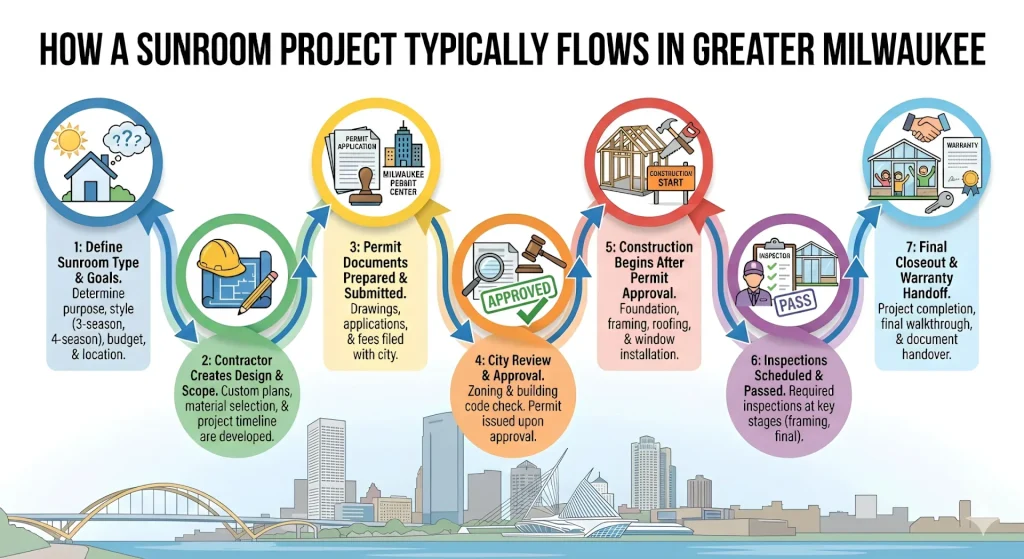
Understanding these steps helps homeowners spot delays early and ask better questions.
FAQ: Greater Milwaukee Sunroom Contractor Selection
Do I need a permit for a sunroom in Greater Milwaukee?
Most sunrooms require permits due to structural work and attachment to the home.
What Wisconsin credential should I ask about?
Ask who holds the Dwelling Contractor and Dwelling Contractor Qualifier credentials tied to the permit.
What matters most for winter comfort?
Window performance, air sealing, roof design, and proper heating.
Why do some sunrooms get condensation?
High indoor humidity, cold glass, and poor air sealing are common causes.
What is the cleanest way to compare quotes?
Compare the written scope first, not just the price.
Need a Quick Bid Review?
Outdoor Oasis reviews sunroom estimates for missing details, unclear allowances, permit gaps, and winter performance risks. A quick consult can help you move forward with confidence and fewer surprises.