


A 20×20 sunroom is one of the most common sizes homeowners plan around. At 400 square feet, it’s large enough to function as a real living space. It’s a room you’ll actually use daily, not just on weekends. But that same footprint also means the difference between sunroom types shows up clearly in the budget.
Search for a number online, and you’ll mostly find national averages that don’t account for Wisconsin’s frost-depth requirements, snow load specs, or local labor rates. Those figures can leave you significantly underprepared.
As the team behind Outdoor Oasis, with over 20 years of custom home construction experience, we work with homeowners across the Greater Milwaukee area every day on projects exactly like this. This article breaks down what a 20×20 sunroom actually costs here, what drives that number, and how to plan your budget before you get a single quote.
Want a number specific to your home and property? Reach out to our team for a no-obligation consultation, and we’ll walk through the details with you.
As residential sunroom builders in Milwaukee, we offer custom sunrooms across three main models, and the one you choose is the biggest single factor in your total cost.
Why 20×20 Is a Popular Planning Size
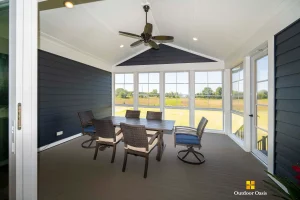
Four hundred square feet is a versatile footprint. It fits a full seating area, a dining table, and still leaves enough room to move comfortably. It’s also large enough that building it well, with proper glazing, insulation, and structural spec, makes a meaningful difference in how the space feels year-round.
At smaller sizes, the cost gap between a basic three-season room and a fully insulated four-season build is easier to absorb. At 20×20, that gap is real money. Knowing what you’re choosing and why matters more at this scale.
Sunroom Type Is the Biggest Cost Driver
Before square footage, before add-ons, before anything else. The type of sunroom determines the bulk of your budget. Here’s how the main options compare at 20×20.
| Sunroom Type | Best For | Relative Cost at 20×20 |
| WeatherMaster (Model 200) | Three-season use, open-air feel | $20,000 – $35,000 |
| Three-season room (Model 300) | Spring through fall, comfortable seasonal use | $30,000 – $50,000 |
| Four-season insulated (Model 400) | Year-round use, full thermal performance | $50,000 – $80,000+ |
WeatherMaster Sunroom (Model 200)
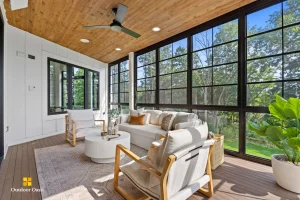
The Model 200 uses two-inch foam panels and WeatherMaster vinyl window systems that slide up or down to provide up to 75% ventilation. It’s built for homeowners who want the open-air feel of their existing deck or porch, with protection from bugs, elements, and harmful UV rays. At 20×20, this is the most accessible starting point for a professionally installed, aluminum-framed sunroom.
Three-Season Room (Model 300)
The Model 300 steps up to two-inch extruded insulated aluminum pillars with single-glazed glass and aluminum-framed double roller windows. It’s a brighter, more refined space than a screen room and handles Southeastern Wisconsin’s spring, summer, and fall conditions well. Roof systems are available in cathedral ceiling or studio pitch configurations, and the room can be built over an existing deck, porch, or carport.
Four-Season Insulated Sunroom (Model 400)
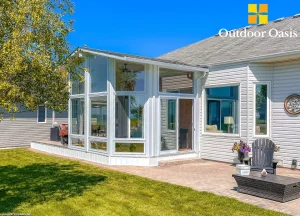
The Model 400 is built for year-round comfort in Wisconsin’s climate. High-density 3-inch foam walls, heavy-gauge 3-inch aluminum extrusions, and high-efficiency Low-E argon glass windows create a room that stays warm in winter and cool in summer. Commercial-grade thermal breaks reduce condensation and heat loss throughout. At 20×20, this is the higher-end build, and it costs more because it does significantly more.
If you’re still deciding between seasonal and year-round use, three-season vs. four-season sunrooms in Milwaukee walks through the practical tradeoffs in detail.
What Else Affects the Cost of a 20×20 Sunroom
The model is the starting point. These additional variables are what move the number up or down from there.
Foundation and Site Conditions
A 20×20 sunroom needs a structurally sound base. In the Greater Milwaukee area, that means frost-protected footings. A slab without frost-protected footings isn’t a viable base, and building on one that doesn’t meet this requirement creates real structural risk over time.
If you have an existing frost-protected concrete slab in good condition, that’s your best starting point. An existing deck may need structural assessment and reinforcement before the sunroom can go on top. No existing surface means new footings and a base, which adds meaningful cost.
Roof System and Panel Specification
The Model 400 includes an option for Therma-Deck, a pre-manufactured insulated floor and roof deck system using Engineered Oriented Strand Board sandwiching a foam insulating core. It’s available in multiple R-value thicknesses and eliminates the need for separate framing work. Choosing a higher R-value panel or a cathedral roofline over a standard studio pitch affects material cost at this footprint.
Upgrades and Add-Ons
Once the base structure is scoped, upgrades are where you personalize the space. Common additions at the 20×20 scale include:
- Sunshades: Available in chain-driven, chainless, and motorized options, sunshades provide UV protection, sun and glare control, and block unwanted light. A practical addition for south- or west-facing rooms.
- Sunlight Illuminated Valances: A hidden 12-volt LED lighting system embedded in the valance that provides indirect illumination, so you can use the space after dark without installing separate light fixtures.
- Electrical rough-in and outlets: Often not included in the base structure quote. Essential if you plan to heat, cool, or use the space year-round.
- Interior finishing: Flooring, painted trim, and ceiling finishes are almost never part of a base sunroom quote. Budget for these separately.
Permits and Engineering
Counties in the Greater Milwaukee area may each have slightly different permit requirements for sunroom additions. Most municipalities require a building permit, and some projects also require structural engineering drawings. Permit fees and any required engineering stamps are real costs to include in your planning budget.
A Realistic Cost Framework for Greater Milwaukee
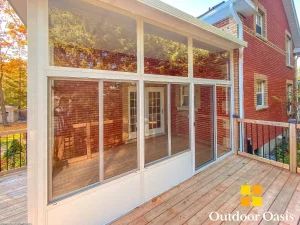
For a professionally installed 20×20 sunroom in Southeastern Wisconsin, here’s how to think about the numbers by tier:
- Model 200 (WeatherMaster), base installation: The most accessible starting point for a three-season enclosed space at this footprint
- Model 300 (Three-season room), standard spec: A step up in structure, glazing quality, and seasonal comfort
- Model 400 (Four-season insulated), full spec: The higher end of the range, reflecting premium panels, thermal performance, and year-round livability
We don’t quote a specific dollar figure without a site visit, and any contractor who does without seeing your property is guessing. What we can tell you is that at 400 square feet, the spec choices, including model type, foundation condition, glazing, and add-ons, all move the number in meaningful ways. Going into a quote conversation knowing these variables puts you in a much stronger position.
What Drives Cost Up vs. Down at 20×20
| Pushes Cost Up | Keeps Cost Down |
| Model 400 four-season insulated build | Model 200 WeatherMaster build |
| No existing surface or inadequate foundation | Frost-protected slab in good condition |
| High R-value Therma-Deck panels, Low-E glass | Standard panel specification |
| Sunshades, lighting valances, electrical | Base structure only |
| Cathedral roofline or complex configuration | Standard studio pitch roof |
| Interior finishing included in scope | Interior finishing is handled separately |
Frequently Asked Questions
How much does a 20×20 sunroom cost in Wisconsin?
The cost depends on the sunroom model, foundation condition, glazing specification, and any add-ons. A Model 200 three-season room at 20×20 sits at the lower end of the range, while a fully insulated Model 400 with upgrades costs significantly more. A site visit is required for an accurate quote.
Is a 20×20 sunroom considered a large sunroom?
At 400 square feet, a 20×20 room is a mid-to-large size for residential sunrooms. It’s large enough to function as a full living space with seating, dining, and circulation room, which is exactly why it’s one of the most requested sizes.
Do I need a permit for a 20×20 sunroom in Greater Milwaukee?
Yes, in most cases. Sunroom additions typically require a building permit in municipalities across the Greater Milwaukee area. Your contractor should confirm the specific requirements for your county and handle the application process.
Can a 20×20 sunroom be used year-round in Wisconsin?
Yes, if it’s built to the right spec. A Model 400 four-season insulated sunroom with Low-E argon glass, high-density foam walls, and proper electrical for heating and cooling is built for Wisconsin’s full climate range. A three-season room is not designed for winter use.
What foundation does a 20×20 sunroom need in Wisconsin?
The sunroom requires a frost-protected foundation. In the Greater Milwaukee area, footings need to reach below the 48-inch frost line. A slab without frost-protected footings is not a suitable base, regardless of its current condition.
How long does it take to build a 20×20 sunroom?
Overall timelines for a sunroom project in the Greater Milwaukee area typically run 12 to 18 weeks from contract to completion. This covers the full scope from permitting and manufacturing through installation, with tasks often overlapping rather than happening strictly one after another.
Talk to Our Team
A 20×20 sunroom is a real investment, and the right build depends on how you plan to use the space, what your site looks like, and what level of comfort you want in Wisconsin’s climate. Outdoor Oasis is the authorized Sunspace dealer serving the Greater Milwaukee area. If you’re ready to move from general estimates to a real project plan, reach out to our team for a detailed, no-pressure quote based on your actual home.